
AllMind vs Hebbia
AllMind is a research system for institutional investors: entitled content classes and your warehouse, joined by a financial ontology and worked by agents.
Hebbia is an enterprise AI platform built around Matrix, a grid where documents are rows and your prompts are columns. Both cite every answer; the split is whether a question can reach past your uploads.
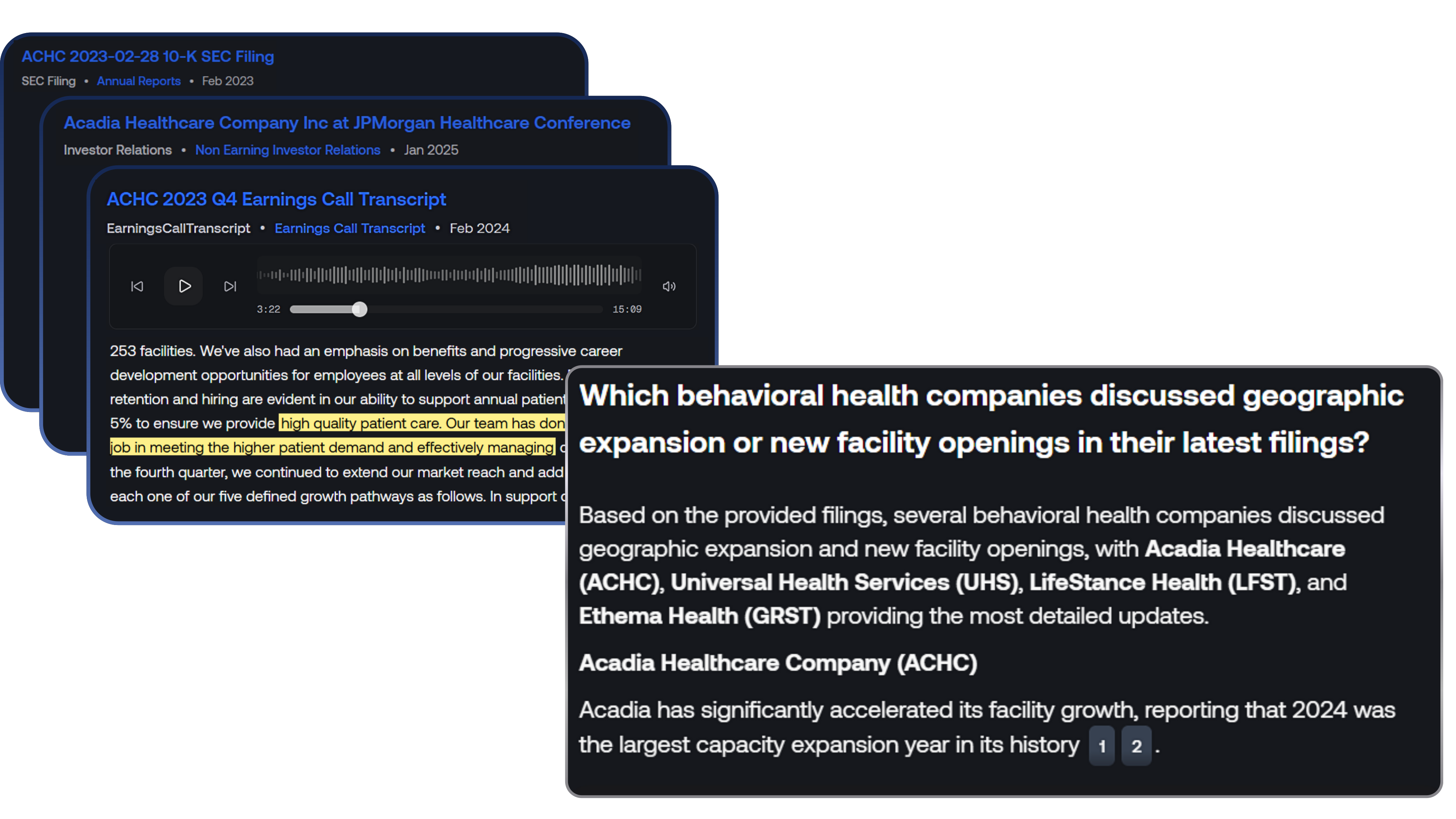
Filings, earnings, aftermarket broker research, live news from thousands of sources, Expert Insights and price data across 40+ exchange and venue feeds sit in one place. Firm systems connect by integration scope and join those datasets in the ontology, then agents return a model, memo or deck.
Matrix turns a private corpus into a grid of cited cells, and a connector library reaches the data licenses your firm holds. Matrix 2.0, announced August 26 2026, carries a workflow through to final models, memos and decks, with a person signing off between steps.
If the hard part of your week is one very large document set that arrived at once, Hebbia is built for it. If the hard part is standing coverage that has to reach past your own files, the content classes matter more than the grid.
Feature by feature
Reading documents
Grid across many documents at once
- AllMind
- Supported
- Hebbia
- Supported
Answers traceable to the source passage
- AllMind
- Supported
- Hebbia
- Supported
Large mixed-format private corpus (VDR, redlines)
- AllMind
- Via Data Rooms
- Hebbia
- Supported
Human sign-off checkpoint between steps
- AllMind
- Automated verification pass
- Hebbia
- Supported
Content the vendor supplies
Aftermarket broker research included
- AllMind
- On a delay
- Hebbia
- Not supported
Live embargoed broker research
- AllMind
- Needs firm’s RMS
- Hebbia
- Not supported
Expert-call transcripts as a built-in class
- AllMind
- Supported
- Hebbia
- Via own license
FactSet, S&P, LSEG and MSCI partner data
- AllMind
- Supported
- Hebbia
- No LSEG or MSCI
Ratings-agency research
- AllMind
- DBRS ratings & credit research
- Hebbia
- Fitch (stated)
Exchange price data
- AllMind
- 40+ exchange & venue feeds
- Hebbia
- ICE feeds (stated)
Alternative and supply-chain data
- AllMind
- Supported
- Hebbia
- Not documented
Your own systems
Snowflake connector
- AllMind
- Supported
- Hebbia
- Supported
Databricks connector
- AllMind
- Supported
- Hebbia
- Supported
S3 connector
- AllMind
- Supported
- Hebbia
- AWS listed, S3 not named
Warehouse queried in place, scoped IAM
- AllMind
- Supported
- Hebbia
- Not documented
API for internal systems
- AllMind
- Not documented
- Hebbia
- Announced Jun 2026
MCP into Claude or ChatGPT
- AllMind
- Not supported
- Hebbia
- Supported
Deliverables
Excel models with live formulas
- AllMind
- Supported
- Hebbia
- Supported
Add-in with citations inside Excel
- AllMind
- Not documented
- Hebbia
- Supported
Decks generated from a prompt
- AllMind
- 20+ investment-bank templates
- Hebbia
- Supported
Bespoke house format with no formatting pass
- AllMind
- Not supported
- Hebbia
- Not documented
Running unattended
Runs that continue without a person between steps
- AllMind
- Automations (AllMind states)
- Hebbia
- Not published
Batch across a long company list
- AllMind
- Up to 200 (stated)
- Hebbia
- Not documented
Commercial and trust
Published list pricing
- AllMind
- Not supported
- Hebbia
- Not supported
SOC 2 Type II
- AllMind
- Supported
- Hebbia
- Supported
ISO certification
- AllMind
- 27001 targeted Q1 2027
- Hebbia
- Held, no number given
Legal and consulting deployments
- AllMind
- Not supported
- Hebbia
- Supported
Marked from each vendor’s own published pages, checked August 30 2026. Ties are shown as ties, and where Hebbia leads it is marked too. “Not documented” means the vendor publishes nothing on the point, which is not the same as saying it cannot be done: Hebbia publishes no scheduled run and does not say whether it queries a warehouse in place or ingests it, and both are worth asking about in writing.
See AllMind on your own coverage→Three differences that survive a close look
Hebbia connects to the licenses you already pay for. AllMind ships two of them as content.
Hebbia’s connector library reaches licenses your firm already pays for, and what Hebbia publishes is the pipe rather than the license. FactSet, S&P Capital IQ, PitchBook, Preqin, Fitch, ICE, Third Bridge and Guidepoint are all named on hebbia.com as of August 30 2026. Its Intralinks announcement of May 26 2026 states the pattern outright, offering that integration to customers “with active deals on Intralinks DealCentre AI”. Read the rest as an inference: Intralinks is the only one Hebbia documents this way.
AllMind ships two of those classes as content instead. Expert Insights is built in: transcripts with senior operators and industry specialists, entitled to the firm or arranged by AllMind, reachable from the Chat toggle, its own tab and the Data Room, so a desk reads them without a network contract of its own. Broker research splits honestly: aftermarket is included on a delay that varies by broker, and live embargoed research still needs the firm’s own RMS entitlement. Neither platform escapes licensing. They put it in different places.
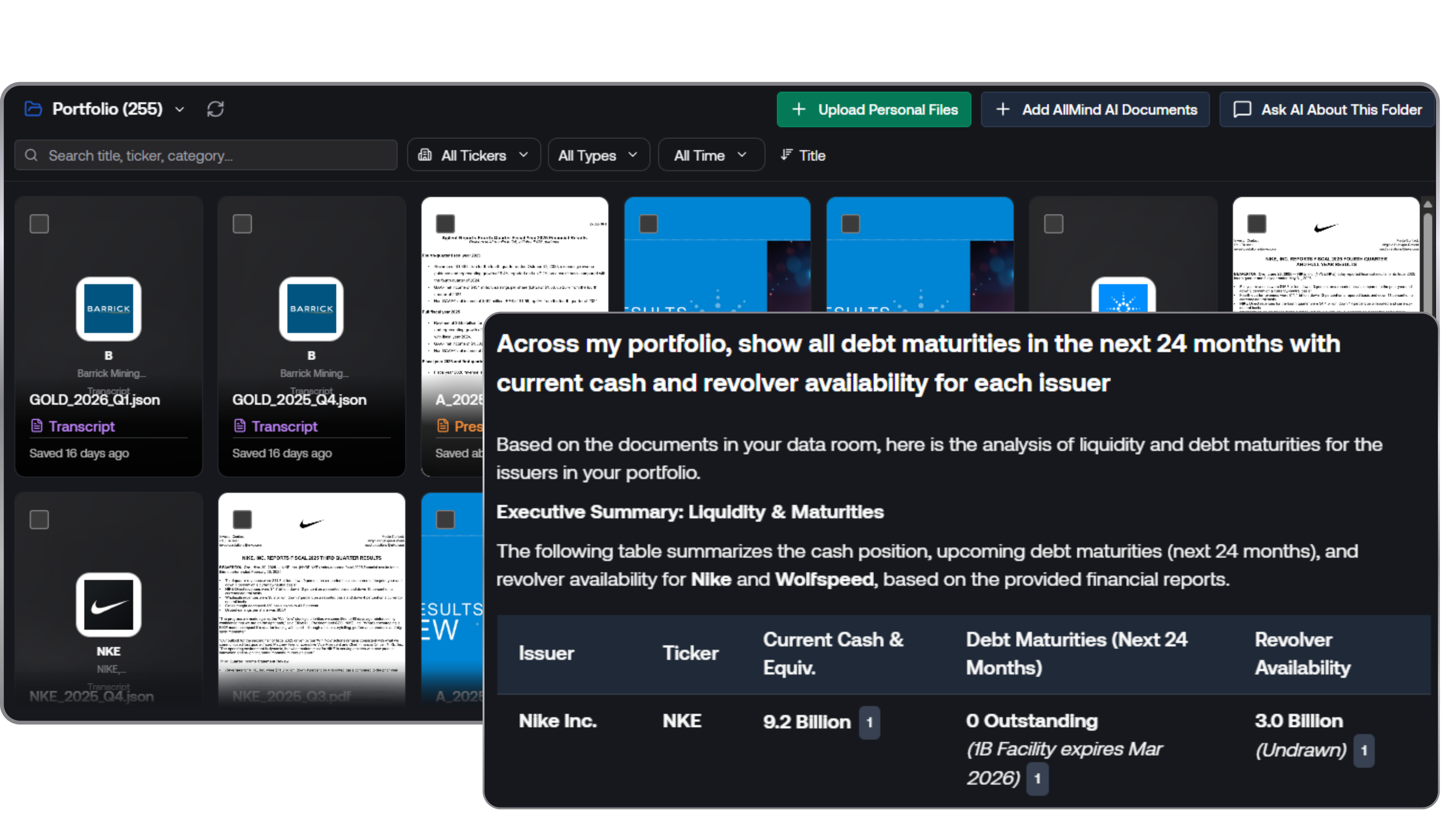
A connector reaches your data. An ontology decides what it means next to everything else.
Both platforms now read your warehouse, so the difference is what happens after the connection. Hebbia shipped a Databricks connector on June 5 2026, described as natural-language queries against the lakehouse with user-level access controls, and a Snowflake connector on July 8 2026. Neither post says whether it queries in place or ingests, which is the first question a security review asks. AllMind reaches Snowflake, Databricks and S3 under a scoped IAM role and queries them where they already sit, so nothing is copied out of the client environment, with Google Drive and OneDrive folder sync for Data Rooms.
AllMind records every data point it holds, internal and external, as an entity with its relationships attached, so an agent working a problem for hours can walk from a portfolio company to a supplier to a second-order effect rather than retrieving documents that mention it. Hebbia’s published architecture is a grid over a corpus plus connectors. Neither vendor publishes a third-party benchmark of either approach.
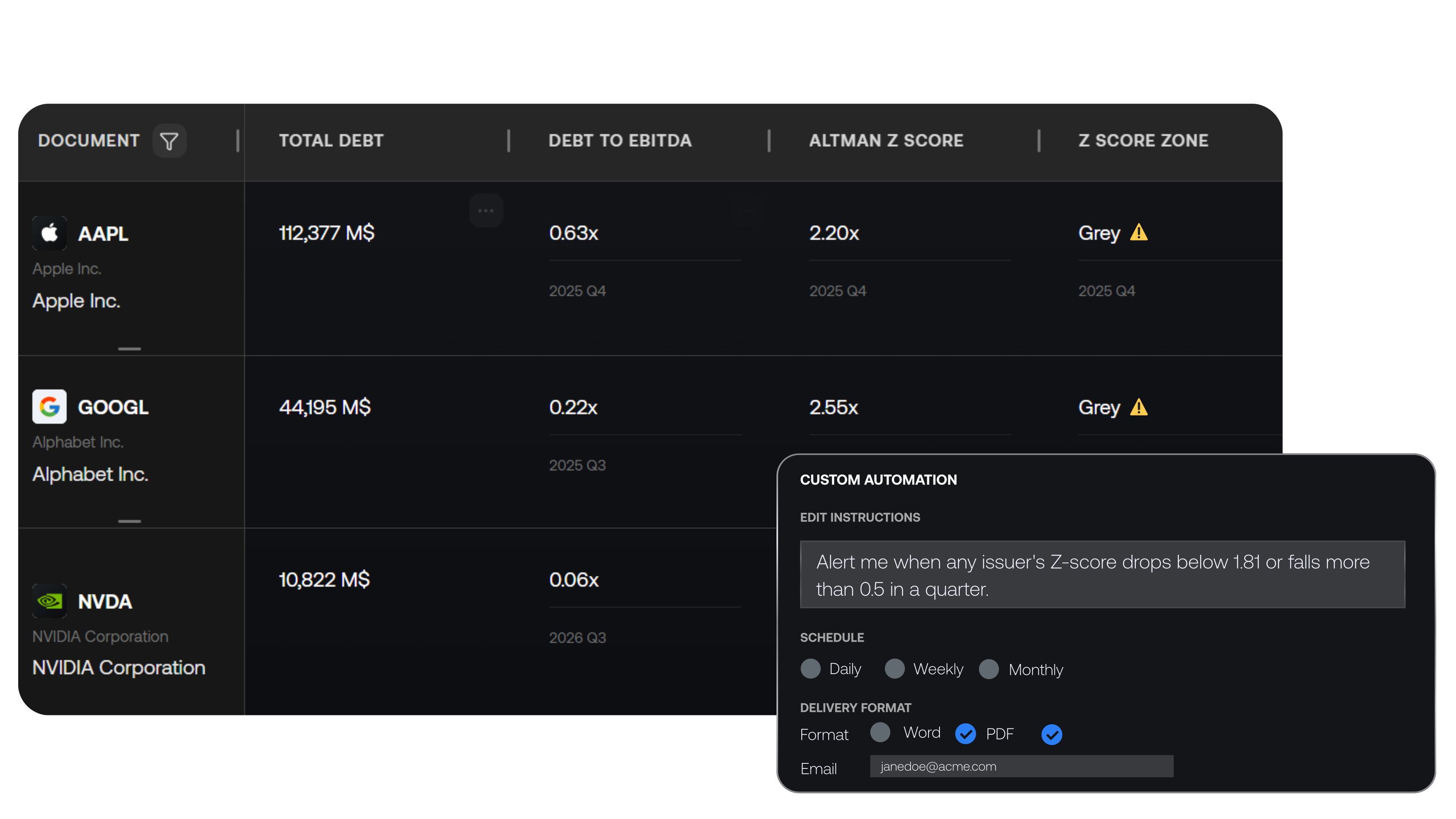
Hebbia designs a person into every loop. AllMind runs the list to the end and hands back a document.
Hebbia puts a person between the steps by design. Matrix 2.0, announced August 26 2026, states that “Every workflow builds in a checkpoint for a person to sign off before the next step runs”. A compliance function may well prefer that. Max, introduced July 30 2026, was described at launch as rolling out to a small set of firms first, and across every 2026 release note Hebbia publishes no scheduled run and no event trigger.
AllMind is built the other way. Agent Studio holds custom agents, and AllMind’s compare pages put the ceiling at 200 companies inside a single automation delivered as Word or PDF. Per-user entitlements are inherited by those agents and can never widen, and any access in or out is logged. Two caveats belong here: the 200-company figure is a compare-page claim rather than a platform-page fact, and an unattended run is a governance decision before it is a feature, so ask both vendors to show it rather than describe it.
Where Hebbia is strong
Hebbia spent 2026 closing gaps a 2025 comparison would have leaned on: Databricks (June 5) and Snowflake (July 8) connectors, ICE equity and fixed-income pricing feeds, an Intralinks deal-room sync, an Excel add-in with per-cell citations (July 1), and an MCP connection into Claude and ChatGPT (June 5). Matrix 2.0, announced August 26 2026, carries a workflow through to final models, memos, decks and emails. Underneath sits Iterative Source Decomposition, still Hebbia’s own term in July 2026 for processing whole documents rather than chunks. All of that is company-stated.
Its about page leads with 2 trillion-plus tokens and $30 trillion of AUM at customer firms, and Hebbia says it crossed a billion pages processed in September 2025, up from 47 million a year earlier. Seyfarth Shaw, not Hebbia, said in March 2026 it had run more than seven million pages through the platform. Hebbia also names logos most vendors cannot: Morgan Stanley, MetLife, Centerview, Latham & Watkins. On a very large private document set it is strong and improving.
Two tools, two different jobs
AllMind
AI research system for institutional investors
Filings, earnings, aftermarket broker research and Expert Insights sit in one workspace, with the firm’s own Snowflake, Databricks or S3 read under a scoped IAM role and queried where it already lives.
Holding the halves together is a financial ontology: companies, suppliers, customers, estimates, filings and a desk’s own research as entities with their relationships attached, so an agent traverses a chain rather than retrieving documents that mention it. Work comes out as an Excel model, a Word memo or a deck, each figure pointing back at its passage.
Hebbia
Document analysis and workflow platform for finance, law and consulting
An enterprise AI platform built around Matrix, a spreadsheet-style grid where documents are rows, your questions are columns, and cited answers fill the cells.
It takes in large, heterogeneous private document sets and runs multi-step agentic work across them, extended by a connector library that reaches data licenses a firm already holds. Max, introduced July 30 2026, carries a workflow to a finished set of slides, report or financial model, and was described at launch as rolling out to a small set of firms first.
What each one is good at, and what it costs you
AllMind
- Aftermarket broker research and Expert Insights ship as content classes, not connectors to licenses you hold
- Snowflake, Databricks and S3 queried in place under a scoped IAM role, nothing copied out
- A financial ontology links companies, suppliers, estimates and filings, so agents traverse relationships instead of retrieving documents
- 6,800+ premium data sources spanning S&P, FactSet, LSEG and MSCI data, live news from thousands of sources, global IR data and alternative data
- Excel models with live formulas, Word memos, and decks from 20+ investment-bank templates
- Per-user entitlements that agents inherit and can never widen, with any access in or out logged
- Live embargoed broker research needs the firm’s own RMS entitlement, and aftermarket comes on a delay
- Deliverables land in a supplied template, and the narrative and the rating stay the analyst’s
- No public MCP claim and no documented API, so nothing answers from inside Claude or ChatGPT
- ISO 27001 is targeted for Q1 2027, while SOC 2 Type II has been certified since November 2025
Hebbia
- MCP into Claude and ChatGPT, shipped June 5 2026, answering over Hebbia projects with citations
- An Excel add-in that puts inline citations on individual cells, shipped July 1 2026
- Named investing workflows: CIM and VDR screening, IC memo prep, expert-call synthesis
- Matrix 2.0 builds a human sign-off checkpoint in before each next step runs
- Fitch ratings research and ICE equity and fixed-income pricing feeds through its connectors
- Attributed customer quotes from Oak Hill Advisors, Orrick and Troutman Pepper Locke
- No broker research of any kind, and it names no LSEG or MSCI relationship
- Expert-call content only through your own Third Bridge or Guidepoint license
- No published pricing, and no contract benchmark exists to check the seat estimates against
- Publishes no scheduled run, and does not say whether it queries a warehouse in place or ingests it
What AllMind and Hebbia actually cost
AllMind
Quote-based, no self-serve tier
AllMind sells enterprise and per-seat subscriptions through sales. Nothing about it is self-serve and there is no monthly plan, so an individual or otherwise non-institutional buyer is better off with a product they can sign up for. Scope is what a quote turns on, not headcount alone.
- Published list price
- None
- How it is sold
- Enterprise and per-seat, through sales
- Self-serve checkout or monthly plan
- Neither
Hebbia
No published pricing at all
Hebbia runs a pricing page that carries no dollar figure. The text of substance is “Value on Day 1” and “ROI out of the box, with unlimited customization for the Enterprise”, next to a demo request (checked August 30 2026). The only per-seat numbers in public come from a third party, and Hebbia has never confirmed them.
- Published list price
- None, no dollar figure on the page
- Professional seat
- About $10,000 per seat per year
- Lite seat
- About $3,000 to $3,500 per seat per year
What changes the quote
The seat is the visible line and rarely the one that moves. On Hebbia the first driver is the entitlements you already hold: it is a connector library, and FactSet, Capital IQ, PitchBook and ICE sit behind subscriptions you pay for elsewhere, so a firm without them buys a thinner Hebbia. The second is compute: Hebbia says it processes more than 250 billion tokens a month. The third is how much of “unlimited customization for the Enterprise” you take.
On AllMind the drivers are how many internal systems get connected, whether the firm brings its own RMS entitlement for live embargoed research, and how many agents and automations run.
The Sacra figures are the only per-seat numbers in public and they cannot be checked. Sacra states them flatly and names no primary source, and while Metronome carried the same band in January 2026, nothing establishes that its figures are independent, so treat the pair as one data point rather than as corroboration. Unlike AlphaSense, FactSet and LSEG there is no Vendr contract median to test them against. Sacra’s other Hebbia estimate, $13M of ARR, is dated June 2024. No 2025 or 2026 revenue or valuation figure is public, and no round amount has been disclosed since July 2024.
Which one you want, task by task
I have a 4,000-file data room for a credit deal closing in three weeks, and I need every covenant, change-of-control and MAC clause pulled and cross-checked.
Hebbia’s named CIM and VDR screening workflow, plus the Intralinks DealCentre sync that keeps the corpus current as the room updates. AllMind Data Rooms will do the reading, but deal-room plumbing is Hebbia’s home ground.
I need what changed across 140 tickers, cited and written up, without an analyst driving every step.
Agent Studio and AllMind automations, which AllMind’s compare pages state can run across up to 200 companies in a single automation and deliver as Word or PDF. Hebbia publishes no scheduled or event-triggered run, and Matrix 2.0 asks a person to sign off between steps by design.
I want to ask our research corpus a question from inside Claude, because that is where my team already works.
Hebbia MCP, shipped June 5 2026, answers over Hebbia projects inside Claude and ChatGPT with inline citations, and an API for internal systems was announced the same month. AllMind makes no public MCP claim, and this page is not going to route around that.
I run a six-person fund. I need the data room, aftermarket broker research, expert-call reading and our Snowflake instance in one place, and a memo out of it.
Expert Insights and aftermarket broker research arrive as built-in classes rather than licenses the fund would have to buy separately, and Snowflake is queried in place under a scoped IAM role. The boundary: live embargoed research still needs the fund’s own RMS entitlement, and the memo lands in a supplied template.
Our deal team lives in data rooms and our public book needs standing coverage. Which subscription do we cut?
Probably neither, this year. Hebbia owns the private corpus that arrives at once and has to be cleared; AllMind owns the standing job of a coverage list, entitled content classes and your own warehouse joined to them. The overlap is the grid and the citation layer, the cheapest part of either contract.
Both platforms read your own documents closely. The question is how far an answer has to reach: past the files you hold, into the market around them, or no further than the corpus in front of you.
If the hard part is a large private document set that arrived at once, Matrix was built for it, and Hebbia’s MCP connection, announced API and Excel add-in are advantages AllMind does not answer today.
If the hard part is standing coverage, AllMind ships aftermarket broker research and Expert Insights as content classes rather than connectors, queries your warehouse in place, and joins it through an ontology before an agent works the problem. Deliverables land in a supplied template, so a bespoke house format still needs a formatting pass.
AllMind vs Hebbia, answered
For some jobs yes, and for others they are not substitutes. Both run cited, agentic analysis across large document sets, and both finish a workflow with a model, a deck or a memo.
Hebbia is built around Matrix, a grid over the corpus you bring, plus connectors to licenses you already hold. AllMind is a research system with the content classes built in, a financial ontology underneath and warehouses queried in place. If the job is a data room, Hebbia is more likely right; if it is standing coverage that has to reach past your own files, AllMind is. Plenty of firms run both.
See AllMind on your own coverage
Join leading hedge funds and institutional investors who trust AllMind.Join leading hedge funds and institutional investors who trust AllMind to accelerate their research and analysis.