
DoGo Power bringt ein handelsübliches, netzstützendes Energiespeichersystem für C&I- und Großprojekte auf den Markt
Source: PR Newswire
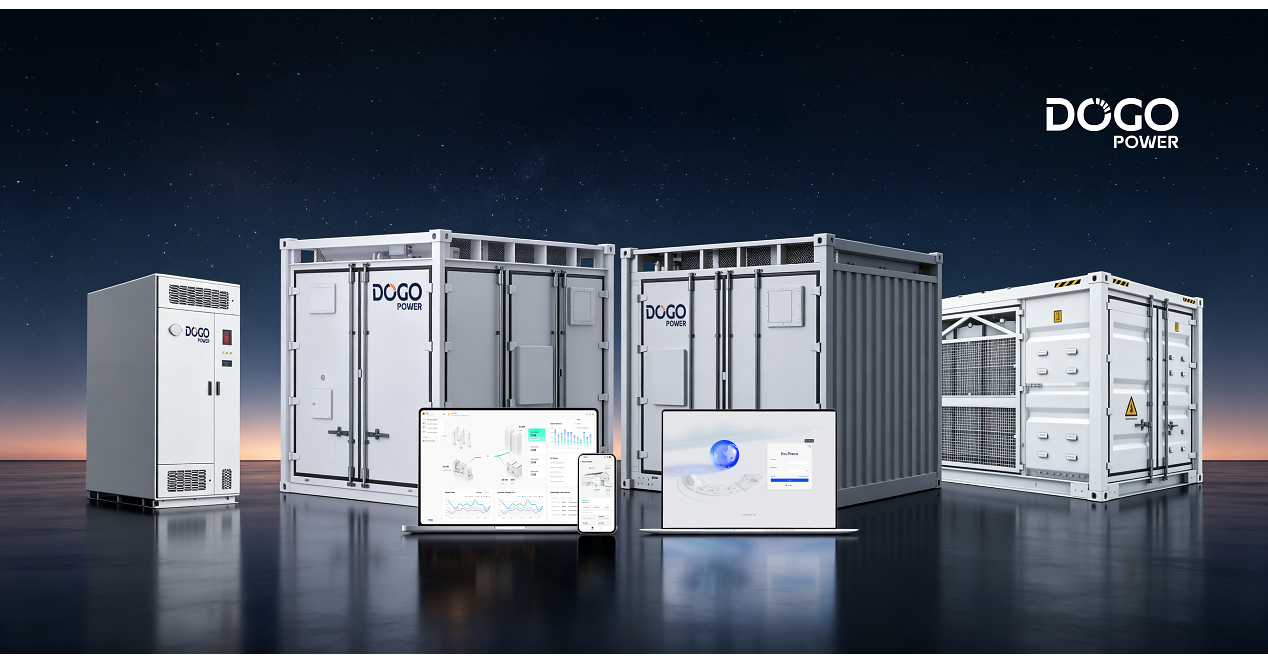
DoGo Power launched globally available grid-forming energy-storage systems for commercial, industrial and utility-scale projects, centered on an integrated EMS/PMS/BMS/PCS platform. Its 1.672MWh 10-foot C&I container is claimed to reduce upfront costs by US$0.012/Wh, cut footprint by 35%, and shorten project timelines by 5-7 days, while enabling grid-to-island switching within 20ms. In an off-grid Indonesian PV-ESS microgrid, the company said electricity costs for more than 3,000 residents fell 81% from a prior US$0.35/kWh, with lifetime output projected above 26 million kWh and CO2 reductions exceeding 22,000 tonnes.
Analysis
This is not yet a public-markets catalyst: DoGo Power is privately held and the release provides no order backlog, pricing, gross-margin, warranty, certification, or bankability data. The claimed installation and footprint advantages matter only if independently validated by EPCs and utilities; in stationary storage, procurement decisions remain dominated by delivered $/kWh, safety certification, financing acceptance, and long-term service guarantees rather than container-level engineering alone.
If compact, grid-forming systems gain adoption, the second-order beneficiary is the inverter/power-electronics ecosystem rather than cell manufacturers. Grid-forming capability raises the value of PCS controls and EMS software as grids add intermittent generation and remote microgrids; listed proxies include Fluence (FLNC), Wärtsilä (WRT1V.HE), Tesla Energy through TSLA, and Eaton (ETN) on switchgear/protection content. Conversely, standardized modular systems could pressure legacy integrators' installation and EPC margins, but there is insufficient evidence that DoGo has scale to affect incumbents.
Near term, monitor tenders and certifications rather than extrapolating a demonstration project into demand. Over 6-18 months, sustained electricity-cost displacement in island grids, mining, data-center backup, and weak-grid C&I sites could support higher storage attach rates, but lithium-cell price volatility, interconnection delays, and utility reluctance to accept grid-forming controls remain the principal adoption brakes. A decline in storage-system ASPs without corresponding service-margin expansion would be negative for pure-play integrators despite rising deployment volumes.
AllMind Terminal
AI-powered research, real-time alerts, and portfolio analytics for institutional investors.
Request TrialMarket Sentiment
Overall Sentiment
strongly positive
Sentiment Score
0.58
Key Decisions for Investors
- No direct trade on the release; place DoGo Power on a private-company competitive watchlist and require disclosed third-party certifications, utility awards, and multi-year service terms before treating its claims as disruptive.
- Maintain a 6-12 month relative-value watch: long ETN versus short a broad solar-equipment proxy (TAN) if grid-forming storage tenders accelerate, as ETN has more defensible switchgear/protection content while solar OEM margins remain exposed to pricing pressure.
- For liquid storage exposure, watch FLNC for evidence that grid-forming projects convert into contracted backlog and service revenue; consider a long only after backlog quality and gross-margin guidance improve. Thesis is falsified by further project cancellations, working-capital deterioration, or margin guidance cuts.
- Monitor battery-cell and LFP pricing, grid-code mandates, and islanded/remote-grid procurement announcements over the next 1-3 months. Rising deployments alone are not bullish for TSLA or FLNC unless revenue recognition and gross-margin capture are visible.
More News
- Saudi, Turkish, Pakistani chiefs plan urgent talks amid Yemen fighting
- US 30-Year Yield Hits Highest Since 2004
- Oil falls amid optimism over potential diplomatic solution to the Iran conflict
- Trump Versus Xi: How Their High-Stakes Summits Compare
- Trump, Xi Address AI, Taiwan During State Visit
- Oracle Japan shares surge 7% after record fiscal first quarter, bucking selloff of U.S. parent